Why and How Fuel Jettison Is Performed on Aircraft
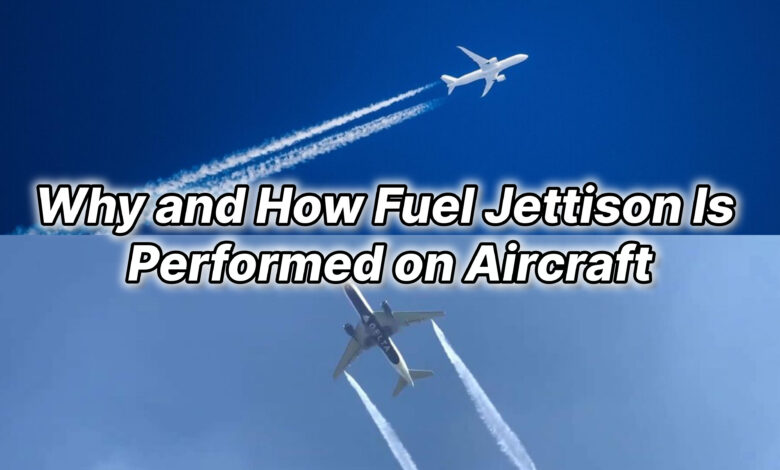
Fuel jettison is required because of the structural difference between maximum takeoff weight (MTOW) and maximum landing weight (MLW). Especially on long-haul wide-body aircraft, this difference can be tens of tons. If a situation arises shortly after takeoff that requires the aircraft to return, the aircraft’s weight must be reduced quickly to keep the loads on the landing gear, wings, and fuselage within safe limits.
The fuel jettison system consists of fuel pumps, jettison manifolds, and discharge nozzles positioned near the wingtips. When the system is activated, fuel is sprayed into the atmosphere at a set flow rate, usually at altitudes above 5,000–6,000 ft. On modern aircraft, the flight management system (FMS) calculates the target landing weight and automatically stops the jettison process when that value is reached. At the same time, wind direction and speed are taken into account to prevent the fuel from coming back into contact with the aircraft.
According to ICAO and environmental regulations, fuel jettison is carried out over the sea or sparsely populated areas. Because the fuel is atomized at high altitude, it evaporates before reaching the ground. Most narrow-body aircraft do not have this system; in emergencies they either burn off fuel while holding or perform a controlled “overweight landing” above MLW. Fuel jettison is a critical flight safety procedure used to protect structural safety limits and reduce the risk of damage from a hard landing.